What Is an Automatic Watch? Everything You Need to Know Before Buying One
An automatic watch is a mechanical timepiece that powers itself through the natural movement of your wrist.
Unlike a quartz watch, which relies on a battery, an automatic watch stores energy in a mainspring. As you wear the watch throughout the day, a weighted component called the rotor rotates with your movements, winding the mainspring and providing the energy needed to keep the watch running.
This ingenious system allows the watch to operate without a battery, making it one of the most admired achievements in traditional watchmaking.
How Does an Automatic Watch Work?
Inside every automatic watch are hundreds of precision-engineered components working together.
The basic process is surprisingly elegant:
- The rotor moves as your wrist moves.
- The rotor winds the mainspring.
- The mainspring stores energy.
- The stored energy is released gradually through the gear train.
- The escapement controls the release of energy.
- The balance wheel oscillates at a constant rate, allowing the hands to display accurate time.
This entire process happens mechanically, without the need for electronic components or a battery.
What Is the Rotor?
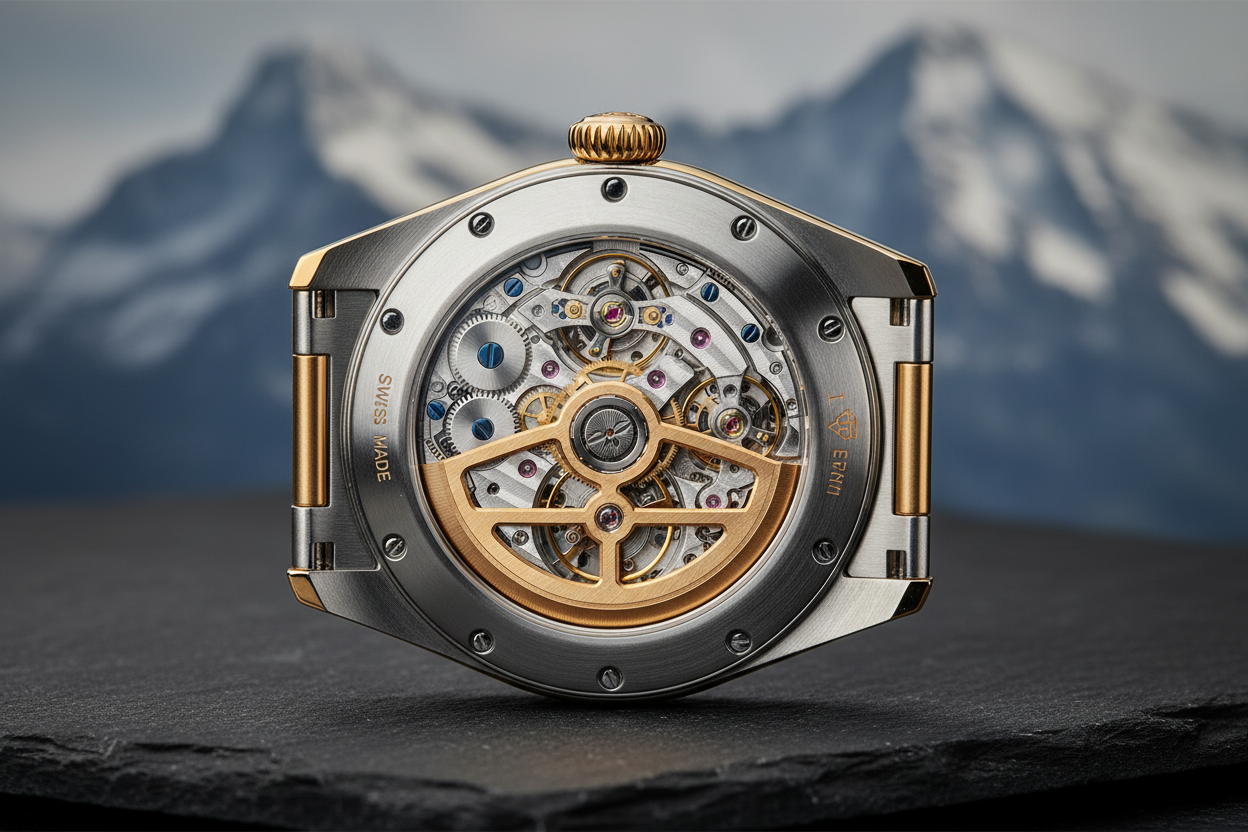
The rotor is a semi-circular metal weight mounted inside the movement.
As you move your wrist, gravity causes the rotor to rotate. That rotation winds the mainspring automatically.
Many automatic watches feature an exhibition case back, allowing you to see the rotor in motion—a detail appreciated by watch enthusiasts because it showcases the movement's craftsmanship.
Does an Automatic Watch Need a Battery?
No.
One of the defining characteristics of an automatic watch is that it operates without a battery.
As long as it receives enough motion or is wound manually when necessary, it will continue to run using stored mechanical energy.
What Happens If You Don't Wear It?
If an automatic watch remains unworn for longer than its power reserve, it will eventually stop.
This is completely normal.
Once you wear it again or wind it manually, the watch resumes normal operation.
Depending on the movement, the power reserve typically ranges from about 38 to 80 hours.
Why Do People Prefer Automatic Watches?
Many enthusiasts appreciate automatic watches because they represent traditional craftsmanship rather than electronic technology.
Some of the most common reasons include:
- No battery replacement required.
- Mechanical engineering you can see and appreciate.
- Often serviceable for decades.
- Smooth sweeping seconds hand.
- Strong connection to watchmaking heritage.
- Long lifespan with proper maintenance.
For many collectors, wearing an automatic watch is about appreciating engineering, not just telling time.
Are Automatic Watches Accurate?
Modern automatic watches can be very accurate, but they are generally less precise than quartz watches.
A quality automatic movement may gain or lose a few seconds per day, depending on the movement, adjustment, and wearing conditions.
This small variation is considered normal and is part of the nature of mechanical timekeeping.
How Long Does an Automatic Watch Last?
With proper servicing, an automatic watch can last for generations.
Many mechanical watches produced decades ago continue to function today after regular maintenance.
Unlike many electronic products, mechanical watches are designed to be repaired rather than replaced.
Is an Automatic Watch Right for You?
An automatic watch is an excellent choice if you appreciate:
- Mechanical craftsmanship.
- Traditional engineering.
- Long-term durability.
- Collectability.
- The experience of owning a finely crafted timepiece.
If your priority is absolute accuracy with minimal maintenance, a quartz watch may better suit your needs.
Neither is inherently better—they simply serve different preferences.
Final Thoughts
An automatic watch is far more than a way to tell time.
It is a miniature mechanical machine powered by nothing more than the movement of its owner.
Understanding how automatic watches work helps you appreciate why they continue to captivate collectors around the world, even in an age dominated by smartphones and digital technology.
Whether you're purchasing your first mechanical watch or expanding your collection, learning how these remarkable movements operate is the first step toward becoming a more informed watch enthusiast.
Frequently Asked Questions
Do automatic watches need batteries?
No. Automatic watches are powered by mechanical energy stored in a mainspring, which is wound by the natural motion of your wrist. No battery is required.
How long will an automatic watch run without being worn?
Most automatic watches have a power reserve of 38 to 80 hours. After that, the watch will stop until it is worn again or wound manually.
Are automatic watches accurate?
They are accurate for everyday use, though they may gain or lose a few seconds per day. This is normal for mechanical movements and is part of what makes them unique.